Bevis v. Naperville: Leading the Fight for Freedom in Illinois
 Have something to say? Leave the first comment
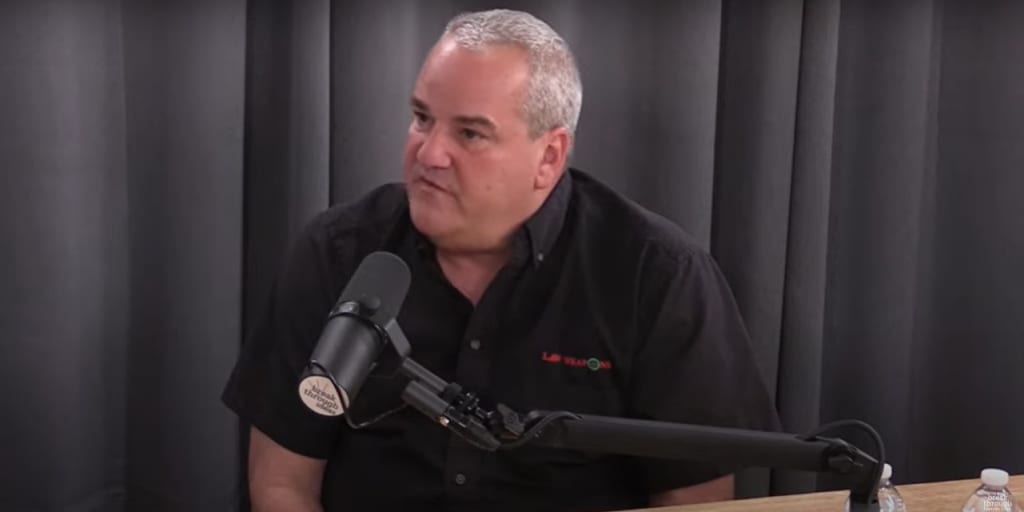
The modern fight for the Second Amendment in Illinois started not in Springfield, but in Naperville. When the Naperville City Council rushed through an ordinance in August 2022 to ban the local sale of so‑called “assault rifles,” Robert Bevis and Law Weapons & Supply refused to roll over. Within weeks, on September 7, 2022, they filed Bevis v. City of Naperville in federal court—the very first lawsuit to challenge this new wave of Illinois rifle bans. That case, Bevis v. Naperville, remains the lead case, and other challenges, including Barnett v. Raoul, have since been incorporated into the same larger fight.
From day one, Bevis and Law Weapons carried the banner for law‑abiding gun owners. Together with the National Association for Gun Rights, they stepped directly into the line of fire to defend the right of ordinary Americans to buy and own common semiautomatic rifles in their own community. While politicians and national gun‑control groups tried to use Naperville as a test bed for broader bans, Bevis v. Naperville put the city on notice: the Second Amendment does not disappear at the city limits.
The ordinance that started it all
On August 16, 2022, after heated debate, the Naperville City Council voted 8–1 to pass an ordinance prohibiting the commercial sale of “assault rifles” inside the city. The measure targeted local gun stores like Law Weapons & Supply, attempting to choke off access to the very firearms that millions of Americans lawfully own for self‑defense and sporting use. This happened months before the statewide Protect Illinois Communities Act (PICA) was even passed in January 2023, meaning Naperville’s ordinance was the opening shot of this entire fight.
Bevis and Law Weapons responded immediately. On September 7, 2022, they filed Bevis v. City of Naperville in the Northern District of Illinois, challenging the ordinance as a violation of the Second Amendment and the rights of both sellers and buyers. The complaint named Robert Bevis, Law Weapons, Inc., and the National Association for Gun Rights as plaintiffs and squarely attacked Naperville’s attempt to ban lawful sales inside city limits.
From Naperville to statewide bans—and back
When Illinois later enacted PICA in January 2023, extending similar bans on rifles and standard‑capacity magazines across the state, Bevis v. Naperville became even more important. Everytown and other anti‑gun groups openly described Bevis as a key test case for defending not only Naperville’s ordinance but also Illinois’s broader restrictions. Over time, the litigation in Bevis was consolidated with parallel challenges to the statewide law—including Barnett v. Raoul—so that the Seventh Circuit could address both the state statute and local ordinances in a single, lead case.
That means the fight that started at Law Weapons’ front door now sits at the center of a statewide, and even national, Second Amendment battle. Bevis v. Naperville is not just “another” case; it is the spine holding the entire challenge together.
Letters to DOJ—and a historic response
While the legal battle raged, Robert Bevis did something most people never see: he went directly to Washington. He wrote multiple letters to the U.S. Department of Justice, personally pleading with then–Attorney General staff and officials like former Florida Attorney General Pam Bondi, who was serving at DOJ, to step in and defend the civil rights of Illinois gun owners. Those letters described the real‑world impact on Law Weapons, on employees, and on everyday customers who suddenly found themselves treated like suspects for wanting to exercise a fundamental right.
Those efforts paid off in a way that stunned the gun‑control world. After receiving those letters and reviewing the litigation, the Civil Rights Division of DOJ filed an amicus brief in the consolidated Bevis/Barnett litigation, siding with the plaintiffs and against Illinois’s rifle and magazine bans. DOJ’s brief explained that there is no historical tradition of banning entire categories of commonly owned semiautomatic firearms and magazines and that under Bruen, the state’s approach cannot stand.
But DOJ didn’t stop at paperwork. The Department sent attorney Harmeet (Harmi) Dhillon to present oral argument at the Seventh Circuit, making the federal government’s support impossible to ignore. Dhillon argued forcefully that AR‑style rifles and standard‑capacity magazines are protected arms in common lawful use, that Illinois has no historical analogue for its sweeping bans, and that earlier, rushed preliminary rulings must give way to a full merits decision grounded in Bruen and the trial record.
Law Weapons’ sacrifice—and the move to Aurora
All of this has come at a cost. Naperville’s ordinance and the continuing bans hammered Law Weapons’ business, cutting off a critical product line and forcing the company to fight an expensive, multi‑year legal war just to keep serving law‑abiding customers. As the city and anti‑gun advocates themselves admitted in court filings, they expected that blocking “one category of one product line” would hurt the store—but they treated that damage as acceptable collateral in their political crusade.
Robert Bevis and Law Weapons chose not to quit. They relocated to Aurora, rebuilding the business while continuing to stand up for the rights of Illinois gun owners. The move has opened a new chapter: a stronger location, an energized customer base, and a renewed commitment to seeing this fight through to victory. Bevis remains an unapologetic supporter of Second Amendment rights for all Americans, even as this battle has taken a serious toll on his company and his family.
Looking ahead: freedom first, then accountability
Today, the consolidated Bevis and Barnett cases are under advisement at the Seventh Circuit. The court has heard oral argument—including Harmeet Dhillon’s powerful presentation on behalf of DOJ—and the entire firearms community is watching for a ruling that could restore Second Amendment freedom across Illinois. At the same time, Judge Stephen McGlynn’s work in the underlying cases has laid the foundation for a permanent injunction, with a detailed factual record showing that these bans target arms that are in common lawful use.
When that freedom is finally restored, the next phase begins. With constitutional rights vindicated, the focus will turn to the monetary and legal reckoning with the City of Naperville for the damage its ordinance inflicted on Law Weapons and its customers. Bevis v. Naperville started this fight, and it will play a central role in finishing it—both in restoring gun rights and in holding local government accountable for trampling them.
For now, the message from Robert Bevis and Law Weapons is simple: stay strong, stay informed, and stay engaged. This battle began with a single store standing up to an overreaching city council, and it has grown into a defining test of the Second Amendment in the 21st century. When the dust settles, we intend to be on the side of freedom—and we intend to win.
Comments
Leave a Comment
Your email won't be published. Comments are reviewed before posting.
Questions or Thoughts on This Article?
Have a question or want to share your thoughts? Send us a message below. We read every submission and will respond by email if needed.