DOJ Sues Virginia Over AR-15 Ban — Illinois PICA Is Next
 Have something to say? Leave the first comment
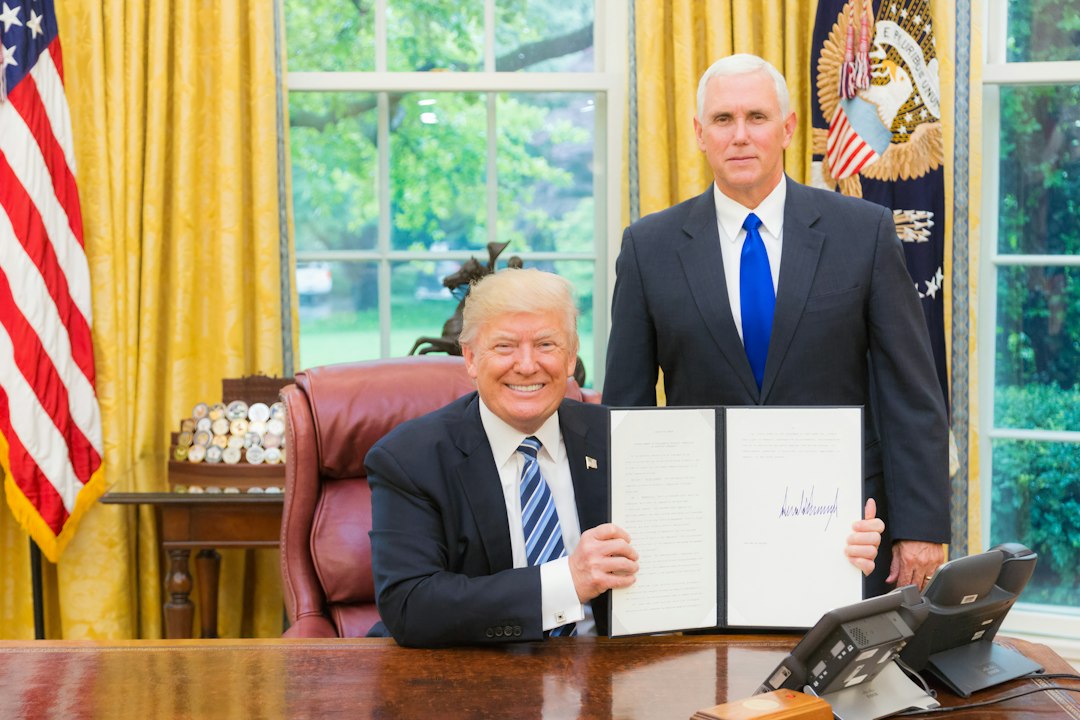
The Trump administration filed a federal lawsuit against the Commonwealth of Virginia last week, challenging Virginia's newly enacted "assault firearms" ban under the Second Amendment. The complaint relies on Heller, Bruen, and the historical-tradition framework — the same constitutional architecture our PICA litigation in Illinois is built on. Illinois gun owners should read what's happening in Virginia carefully, because the arguments being defeated there are the same ones Springfield has been leaning on for three years.
Virginia's law, which took effect July 1, 2026, bans the sale and transfer of commonly owned semi-automatic rifles and standard-capacity magazines. Sound familiar? It should. The structure of Virginia's ban mirrors PICA almost clause for clause: a list of prohibited features, a carve-out for "sporting purposes" that courts keep rejecting as constitutionally meaningless, and a population of law-abiding owners suddenly holding gear that was legal yesterday and isn't today.
What the DOJ's Complaint Actually Argues
The DOJ's Virginia complaint makes two foundational claims. First, semi-automatic rifles like the AR-15 are "Arms" within the plain text of the Second Amendment — commonly owned by millions of Americans for lawful purposes, which under Bruen ends the inquiry unless the government can produce a historical analogue from the Founding era. Second, Virginia cannot produce that analogue, because no such tradition exists. Governments in 1791 did not ban entire categories of rifles in common civilian use.
That second point is critical. Courts have been wrestling with how to apply the historical-tradition test to modern semi-automatic rifles ever since Bruen came down in 2022. Illinois argued in our PICA litigation that AR-15s are somehow "like" the M16 — a military weapon subject to different rules. The DOJ's Virginia complaint rejects that framing directly: a semi-automatic rifle is not a machine gun, it does not fire automatically, and the functional difference is not cosmetic. A firearm that requires a separate trigger pull for each shot is what millions of American civilians have owned and used without incident for decades.
"The most popular rifle in America cannot be banned simply because the government finds it unfamiliar or frightening. Familiarity is precisely the constitutional test."
That framing — familiarity and common use as the constitutional baseline — is central to our case in the Seventh Circuit. I've said it before and I'll say it again: a firearm that can't function as designed is not a meaningful right. The DOJ is now making that same argument in federal court, in writing, with the full weight of the United States government behind it.
Virginia's Legal Chaos Mirrors What Illinois Created Under PICA
What's unfolding in Virginia right now is a near-perfect preview of what PICA did to Illinois. Within 24 hours of Virginia's law taking effect, gun stores were pulling AR-15s from shelves, customers were calling lawyers, and two separate state judges had already issued preliminary injunctions blocking enforcement — at least in part. The Virginia attorney general's office then issued guidance saying the ban remained "in effect across most of the state," creating a legal patchwork where compliance depended on which county you lived in.
Illinois gun owners lived this in 2023. The day PICA passed, phones were ringing, customers were confused, and nobody could get a straight answer about what was legal and what wasn't. The chaos isn't accidental — it's the predictable result of passing a law that conflicts with the Constitution and then watching it collide with the courts.
GOA and VCDL also secured a preliminary injunction in Crump v. Katz, their Virginia lawsuit, preventing the Virginia State Police from enforcing the challenged bans. Multiple injunctions, a federal DOJ suit, and a state attorney general trying to hold the line anyway — this is exactly the pattern Illinois has been living through, just compressed into a single week.
The Supreme Court Cert Grant Changes the Calculus for Everyone
Here's where Virginia's situation and Illinois' converge most sharply. On June 30, 2026, the Supreme Court granted certiorari in Viramontes v. Cook County and Grant v. Higgins — two Second Amendment Foundation cases directly challenging Illinois' and Connecticut's assault weapons bans. The Court will now decide, once and for all, whether governments may ban commonly owned semi-automatic rifles under the Second Amendment.
I wrote about the cert grant in detail in a recent post on this blog. But the Virginia DOJ lawsuit adds a new dimension. The federal government is now actively litigating against the same category of state bans that will be argued before the Supreme Court. The DOJ isn't sitting this one out — it's filing complaints in multiple jurisdictions, building a record, and signaling that it intends to stand on the right side of that argument when it reaches One First Street.
When I wrote directly to AG Pam Bondi last year asking the DOJ to weigh in on our side, this is what I was hoping for. Not just an amicus brief in the Seventh Circuit, but a DOJ that treats state rifle bans as the constitutional violations they are — and acts accordingly. The Virginia lawsuit is that DOJ in action.
Where the Illinois PICA Fight Stands Right Now
Our case — Bevis v. City of Naperville — sits in the Seventh Circuit while the Supreme Court prepares to hear Viramontes and Grant. Those two cases will almost certainly determine whether PICA can survive. The Seventh Circuit upheld PICA in December 2023 using reasoning that multiple scholars and the DOJ itself have since challenged. Once the Supreme Court rules in the AR-15 ban cases, the Seventh Circuit's analysis will either be vindicated or dismantled.
My bet is on the latter. The legal landscape has shifted faster in the past eighteen months than at any point since Heller. The DOJ filing suits against Virginia. The Supreme Court taking the Illinois and Connecticut cases. Preliminary injunctions falling into place across the country. The State of Illinois is increasingly isolated in its insistence that PICA can withstand constitutional scrutiny.
You can follow the full history of this litigation — from the original Naperville ordinance through the Seventh Circuit arguments — in our case coverage archive. If you're a gun owner in Illinois and you want to understand what's at stake, that's the place to start. And if you're looking for an Illinois FFL you can actually trust to know this law, you know where to find us — our online store and our Aurora shop are open.
The state of play right now: the Supreme Court has the case, the DOJ is fighting on the right side, and the arguments that propped up PICA are being systematically dismantled in courtroom after courtroom. That's not spin — that's the record.
We owe our customers the truth and the fight. Both continue.
— Robert Bevis, Law Weapons & Supply
Comments
Leave a Comment
Your email won't be published. Comments are reviewed before posting.
Questions or Thoughts on This Article?
Have a question or want to share your thoughts? Send us a message below. We read every submission and will respond by email if needed.