Sensitive Places Doctrine Slammed by Federal Judge
 Have something to say? Leave the first comment
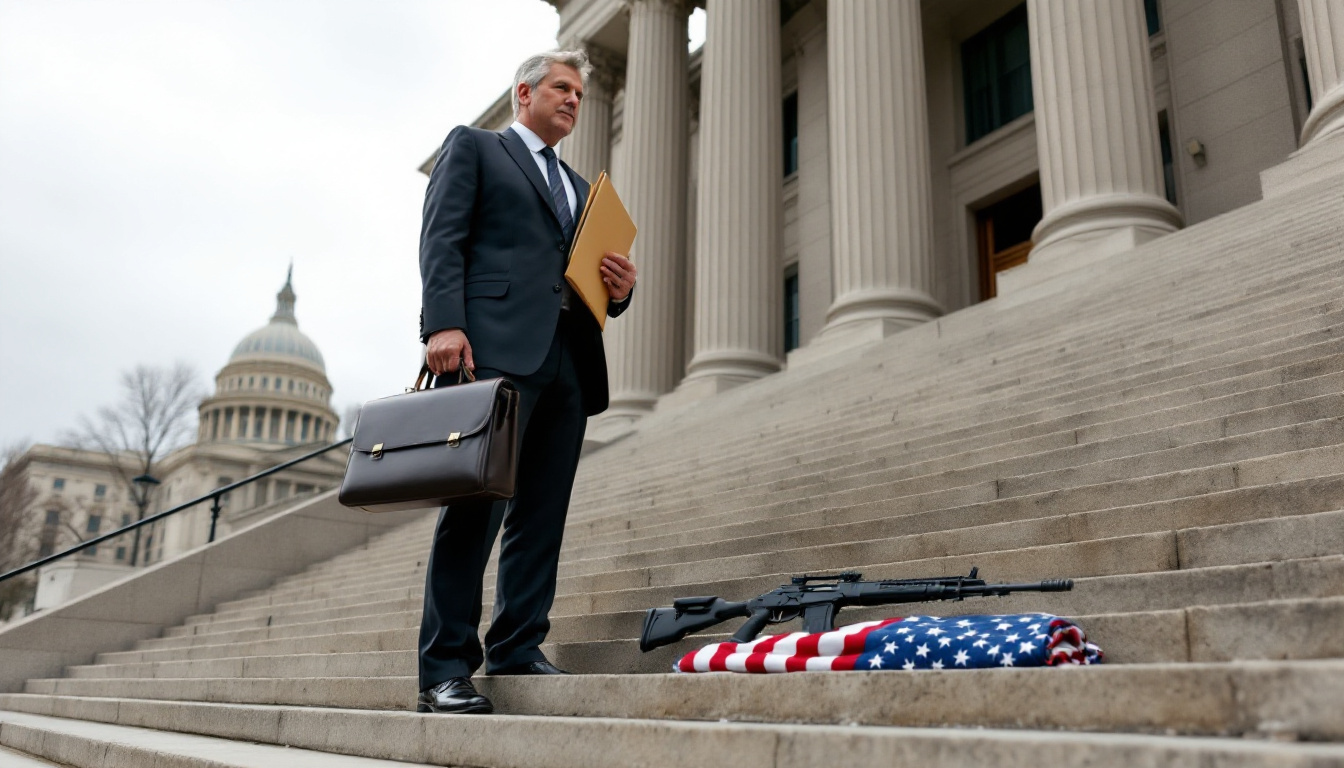
A federal judge in the Northern District of New York has done something you don't see very often: called out other courts — by name and by conduct — for intentionally misreading Supreme Court precedent to reach anti-gun outcomes on the sensitive-places doctrine. The ruling is sharp, the language is pointed, and for Illinois gun owners tracking Bevis v. City of Naperville and the broader PICA litigation in the Seventh Circuit, it lands at exactly the right moment.
What the Northern District of New York Actually Said
The court's ruling focused on how far governments can stretch the "sensitive places" exception carved out in New York State Rifle & Pistol Association v. Bruen. The Supreme Court held in 2022 that the Second Amendment protects the right to carry in public for self-defense — but acknowledged that certain historically established sensitive locations, like courthouses and legislative chambers, could be off-limits.
Anti-gun jurisdictions have been trying to swallow the rule with the exception ever since. Declare enough places "sensitive" and you've effectively banned carry everywhere without technically overruling Bruen. The Northern District of New York judge didn't just push back on that argument — he accused courts engaging in that maneuver of doing so deliberately, with full knowledge that they were defying the Supreme Court's clear instruction.
When a federal judge uses the word "intentionally" to describe how other courts are violating the Second Amendment, that's not routine legal criticism. That's an accusation with teeth.
The opinion fits into a growing body of post-Bruen rulings where district and circuit judges are no longer willing to paper over the tension between the Supreme Court's text-and-history test and lower-court rulings that simply ignore it.
The Illinois Connection: PICA and the Sensitive-Places Playbook
Illinois hasn't leaned on the sensitive-places exception the same way New York has — the State's approach under PICA has been to categorically ban entire classes of rifles and magazines rather than restrict where they're carried. But the underlying legal tactic is the same: find any doctrinal foothold that lets you argue Bruen doesn't apply to the specific restriction you're defending.
In the Seventh Circuit litigation over our case, Bevis v. City of Naperville, the State has argued that AR-15-style rifles and standard-capacity magazines fall outside the Second Amendment's protection entirely — that Bruen's test doesn't even get triggered. That's a different flavor of the same evasion. And when federal judges in other circuits start publicly calling that pattern out, it strengthens the argumentative foundation for every court that's being asked to apply Bruen honestly.
You can follow the full history of where our case stands on the Law Weapons blog. The short version: we've been at this since the City of Naperville passed its local ban, and the case has worked its way into the Seventh Circuit with the DOJ now filing an amicus brief on our side.
Why Judicial Accountability Rulings Like This One Matter
There's a practical reason this kind of ruling reverberates beyond the district where it was issued. Federal courts watch each other. When a judge writes an opinion accusing peer courts of intentional constitutional defiance, that opinion circulates. It gets cited. It becomes part of the legal conversation that shapes how the next panel of judges approaches the next challenge.
The Seventh Circuit is not the Second Circuit, and Chicago is not Albany. But the legal arguments being deployed against gun rights in Illinois and New York share the same DNA. Courts that are willing to say that out loud — in writing, on the record — are doing the kind of work that moves the needle for gun owners everywhere, including here.
Mark Smith at Four Boxes Diner covered the ruling in detail on his YouTube channel, and his breakdown is worth your time if you want to go deeper on the doctrine. He also published a new law review article on related issues in the Harvard Journal of Law & Public Policy that touches on how licensing delays function as a form of constitutional evasion — a pattern Illinois gun owners know intimately.
Where the PICA Litigation Stands Right Now
As of this writing, Bevis v. City of Naperville and Barnett v. Raoul remain in active litigation in the Seventh Circuit. The DOJ filed an amicus brief siding with the plaintiffs — with Assistant Attorney General Harmeet Dhillon arguing personally at the Seventh Circuit — after I wrote directly to the Department and to former AG Pam Bondi laying out what PICA has done to law-abiding gun owners and to a business like Law Weapons & Supply that has been federally licensed for 30 years.
Every ruling that reaffirms Bruen's actual standard — whether it comes from New York, Texas, or down the street — builds the legal architecture that our case and cases like it depend on. A judge in the Northern District of New York accusing other courts of intentional constitutional violations isn't a sidebar to this fight. It's part of the same fight, playing out on a different stage.
If you want to stay current on every development as it happens, bookmark the Law Weapons blog. When there's a filing, a ruling, or an argument date worth knowing about, I'll put it here.
When there's news, you'll hear it from me first.
— Robert Bevis, Law Weapons & Supply
Comments
Leave a Comment
Your email won't be published. Comments are reviewed before posting.
Questions or Thoughts on This Article?
Have a question or want to share your thoughts? Send us a message below. We read every submission and will respond by email if needed.