Stun Gun Cert Petition — SCOTUS and Illinois PICA
 Have something to say? Leave the first comment
The Second Amendment Foundation and the Firearms Policy Coalition have asked the Supreme Court to take up a challenge to New York City's ban on stun guns — and while that might sound like a New York problem, Illinois gun owners have real reason to watch this one closely. The cert petition drops directly into the same doctrinal fight driving our PICA litigation at the Seventh Circuit, and the way SCOTUS frames its answer could reshape the legal ground we're standing on.
What SAF and FPC are actually asking the Court to decide
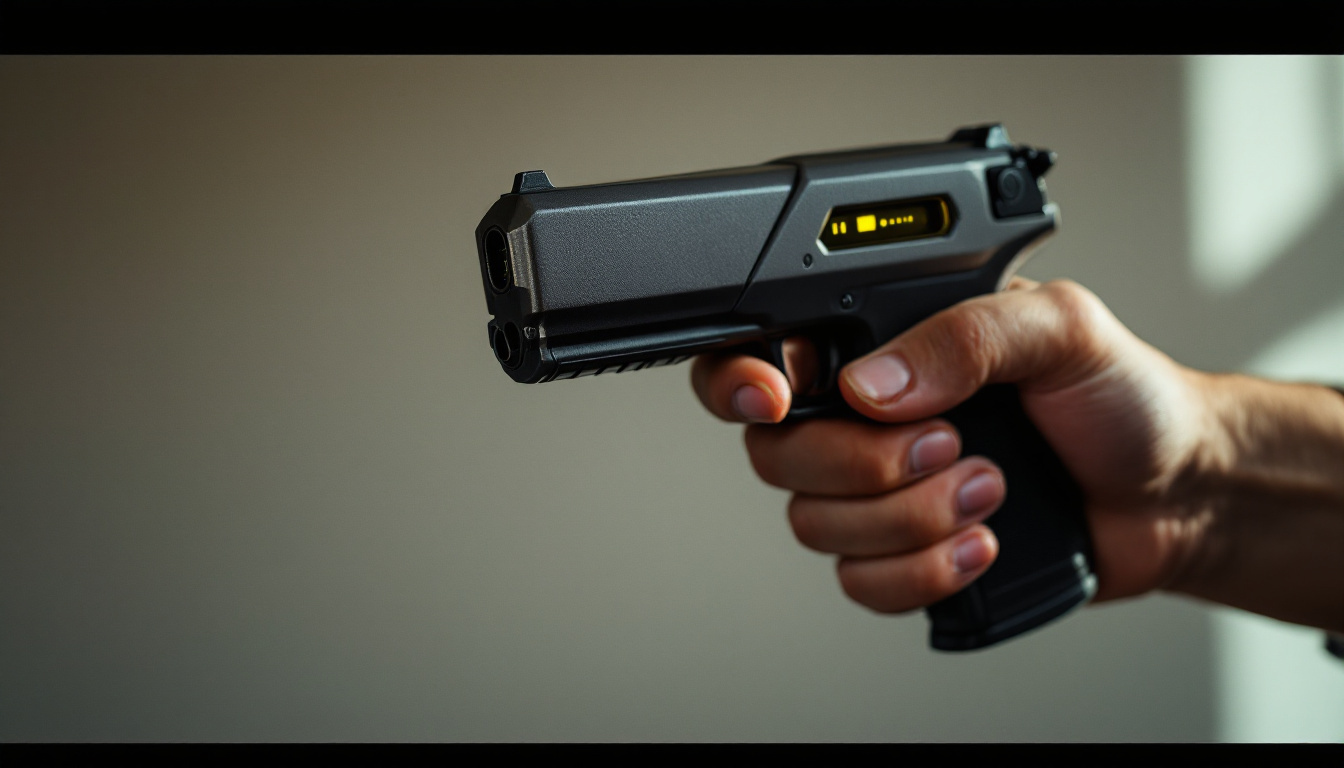
The petition asks the Supreme Court to resolve whether a government can ban an entire category of arms that law-abiding citizens commonly keep for self-defense. New York City's stun gun prohibition does exactly that — it draws a line around a class of weapons and says civilians simply cannot have them, full stop.
That structure should sound familiar. Illinois' Protect Illinois Communities Act does the same thing with semi-automatic rifles and standard-capacity magazines. The State drew a line around an entire category of arms and told Illinois gun owners those arms are forbidden. Different weapons, same constitutional theory — and the same theory is what the Seventh Circuit is wrestling with right now in our case.
The question isn't whether the government likes a particular type of arm. Under Bruen and Heller, the question is whether law-abiding Americans commonly own it for lawful purposes. Stun guns: yes. AR-15-style rifles: absolutely yes.
Why the "common use" standard is the hinge point for PICA
Heller established that arms in "common use" by law-abiding citizens for lawful purposes are constitutionally protected. Bruen reinforced that the government bears the burden of proving a historical tradition of analogous regulation — it can't just assert danger and call it a day.
Illinois has spent two years trying to argue around those two decisions in the PICA litigation. The State's position, stripped to its core, is that AR-15-style rifles are different enough, dangerous enough, and military enough that the normal Bruen analysis shouldn't apply. Judges across multiple circuits — including members of our own Seventh Circuit panel — have pushed back hard on that reasoning.
If SCOTUS grants cert on the stun gun petition and writes an opinion that clarifies exactly how "common use" works, that opinion lands directly on the Seventh Circuit's desk in our case. A Court that says "government cannot ban arms civilians commonly own for self-defense" leaves Illinois' PICA ban with almost nowhere to stand.
You can follow the full history of our PICA litigation coverage here on the Law Weapons blog if you want the step-by-step context.
The petition's timing inside a busy SCOTUS term
As of this writing, the cert petition has been filed but SCOTUS has not yet scheduled it for conference. The Court typically takes eight to twelve weeks to act on a petition — meaning a grant or denial could come before the end of the current term or early in the next.
That timeline matters for us because the Seventh Circuit is also managing the consolidated PICA appeals, including Bevis v. City of Naperville and Barnett v. Raoul, alongside the Supreme Court's own recent grant on the broader semi-auto question. Courts at every level are watching what SCOTUS signals. A cert grant on the stun gun case — even before oral argument — tells the circuits that the categorical-ban theory is back on the Court's radar.
A denial, on the other hand, doesn't mean the argument dies. It means SCOTUS chose a different vehicle. The underlying legal question — can government categorically ban a class of arms in common use — is already teed up in cases this Court has already agreed to hear.
How this connects to what we're doing in Illinois
I've said before that PICA doesn't exist in a vacuum. Every ruling that refines what "arms" means under the Second Amendment, every opinion that tightens the government's burden of proof, every cert grant that signals SCOTUS isn't done policing categorical bans — all of it feeds back into the litigation we're running in Illinois.
I made the decision years ago to fight this case rather than quietly comply and move on. That decision meant closing the Naperville location, reopening here in Aurora, and carrying this all the way through the federal courts. We're not going to stop monitoring every development that touches our legal theory, including a stun gun petition out of New York City.
If you want to see what we carry at the Aurora shop while all this plays out, browse our current inventory here. And if you need gunsmithing work done while you're watching the courts, our gunsmithing services page has the details.
The constitutional principle at stake in the stun gun case is the same one at stake in PICA: the government does not get to pick which arms you're allowed to own simply because it has decided those arms are too effective, too modern, or too threatening to its preferred policy. That argument lost in Heller. It lost in Bruen. It needs to keep losing.
One ruling at a time, we're getting there.
— Robert Bevis, Law Weapons & Supply
Comments
Leave a Comment
Your email won't be published. Comments are reviewed before posting.
Questions or Thoughts on This Article?
Have a question or want to share your thoughts? Send us a message below. We read every submission and will respond by email if needed.